AI B2B Commercials: Making Complex Tech Click
· Projects · 4 min
Learn how to turn complex technology into compelling B2B commercials that clients instantly grasp, blending visual storytelling with technical accuracy.
A printer spirals out of control, wreaking havoc across an office. An everyday corporate fixture takes center stage in a business-to-business campaign. Epson’s “Toner Printer Madness”—featured by Brazil’s Clube de Criação on November 3, 2026—relies on clever exaggeration to spotlight the brand’s environmental narrative around toner waste. Created by BETC Havas and produced using AI by Maverick AI Filmmaking, this Brazilian spotlight raises a crucial question: How can an AI-driven B2B commercial showcase complex technical offerings so that decision-makers outside engineering instantly understand their value?
What intrigues me most is the act of translation. A product has functional specifications. A client has an operational challenge to solve. A film must bridge that gap. At Chris Jean, our corporate AI video production is guided by this exact principle: visual storytelling should captivate the viewer while making it crystal clear why an offering is worth exploring.
A Film Needs a Decision to Facilitate A technical product can be approached from countless perspectives. R&D, sales, and procurement would likely produce three entirely different films. Engineering wants to show off technical novelty. Sales needs an engaging conversation starter. Procurement wants to verify that requirements are met.
That is why every B2B commercial must start with a concrete business decision: Should the viewer schedule a demo, rethink an existing process, or involve a technical lead? The entire narrative economy hinges on that objective.
As reported by Marketing Communication News on November 5, 2026, Epson leans into humor and an exaggerated worst-case scenario. To me, this reveals an inspiring creative possibility: B2B films can—and should—surprise their audience. What matters is whether the unconventional metaphor connects directly back to the commercial value proposition.
The environmental claims in this campaign reflect the brand’s own positioning. A creative concept is never a substitute for an objective product benchmark. Maintaining this distinction is essential when scripting B2B films: Which claims can we substantiate with hard data, and which scenes merely serve to illuminate the concept?
What a Sensor Could Tell on Screen Consider a hypothetical example: an industrial manufacturer producing condition monitoring sensors for heavy machinery. A data sheet outlines measurement tolerances, bus interfaces, and mounting specs. All essential facts—yet far too overwhelming for the opening hook of a commercial.
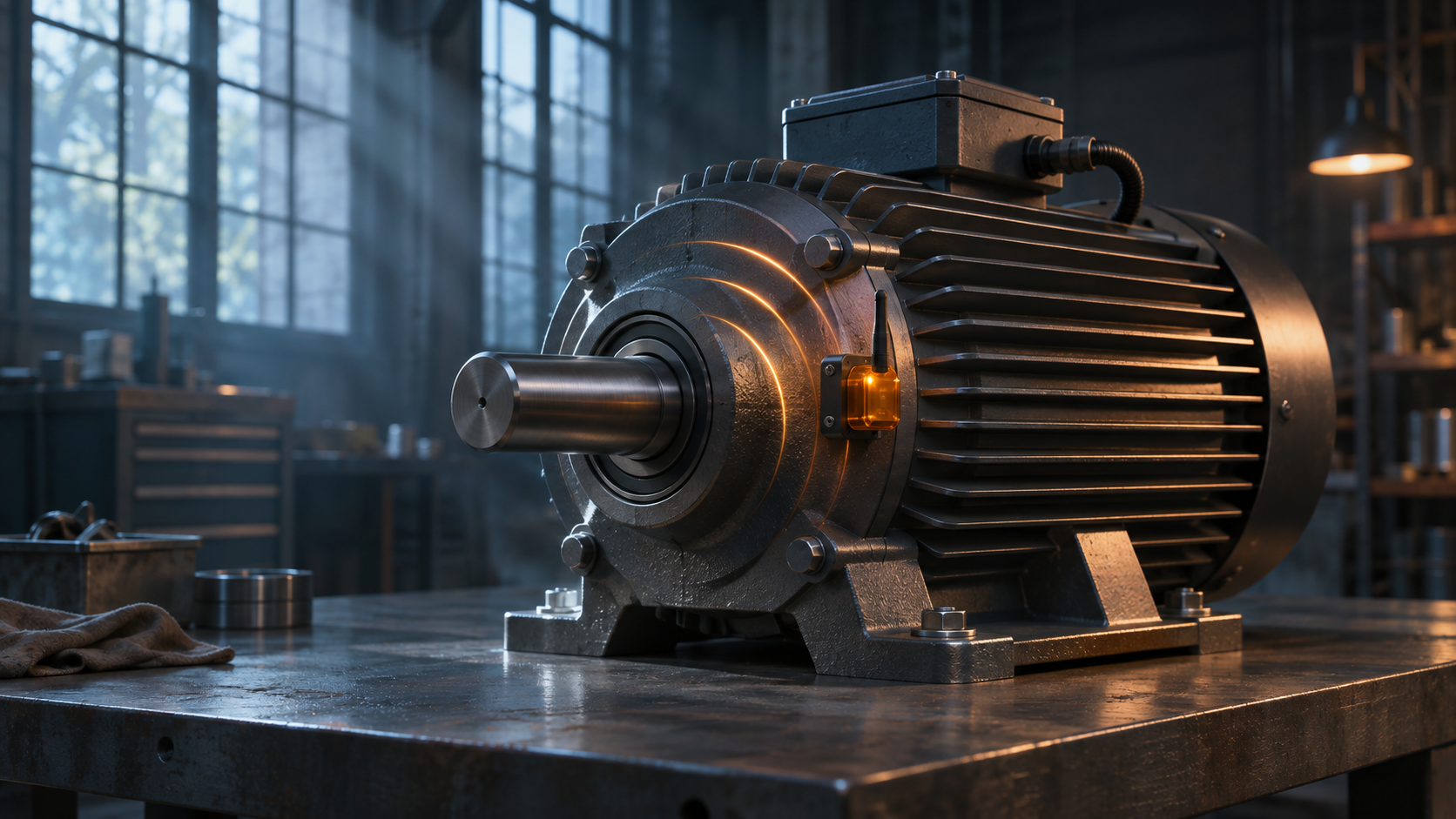
The opening shot could feature a running motor, humming in steady rhythm. Then, an imperceptible tonal shift occurs in the sound design. The camera glides closer to the bearing housing. A subtle graphic accent highlights the precise measurement zone. Only then do we reveal the sensor itself alongside a clean, intuitive diagnostic readout.
The visual idea poses an intriguing question: What can be detected before a human operator notices any irregularity? Whether this specific sensor can deliver on that promise depends entirely on its verified capabilities. A film must never turn this into a hollow guarantee to predict every machine failure.
This is where collaboration with the client becomes truly effective. Subject-matter experts establish robust boundaries and technical truths. We translate those insights into camera movement, pacing, rhythm, and clear narrative language. A single, clearly explained use case often builds far more trust on first contact than a barrage of ten on-screen bullet points.
Realism Demands Technical Oversight Photorealistic AI imagery carries a distinct responsibility in the B2B sector. A convincingly rendered piece of industrial equipment immediately reads as an authentic product showcase. Consequently, connectors, proportions, operational ergonomics, and visible components must match the real-world product whenever technical fidelity is claimed.
For our professional AI video production, this means clearly defining which elements allow creative freedom and which are strictly bound to engineering documentation. Existing product photography or verified 3D CAD models can serve as the geometric anchor, around which cinematic environments, lighting, and drama are meticulously staged.
In our sensor scenario, the manufacturing floor can be styled atmospherically, while the sensor placement remains technically flawless. Glowing energy lines wrapping around the motor are clearly understood as visual metaphors rather than literal features of the device. Subtle on-screen cues or disclaimers can be integrated whenever ambiguity might arise.
Sound design establishes that boundary just as critically. A harsh mechanical grind suggests imminent breakdown; a nuanced change in rhythm tells a story of early predictive detection. Music, foley, and voice talent must reinforce the exact same message. Genuine technical precision stems from the alignment of these craft choices.
What Companies Can Commission At Chris Jean, businesses can commission full-scope AI B2B commercials encompassing concept design, visual direction, original music, voiceover casting, and final audio mastering. Film direction, 3D, and motion design unite technical substance into a seamless aesthetic. For clients across Germany and the US, localized language versions and voiceovers can be orchestrated to match each regional market.
A proven approach splits the commission into two clear deliverables: a commercial that introduces the strategic theme and drives inbound inquiries, followed by a modular technical sequence that answers the engineering questions that follow. Both share the same visual pedigree while providing tailored information depths, equipping sales teams with assets that hold value long after the initial impression.
Smooth project preparation relies on approved product specs, recurring customer questions, and a designated engineering liaison for technical review. Before visuals are generated, the core takeaway of the film must be locked in. In our sensor example, that might simply be an invitation to evaluate suitability on the client’s own machinery.
A great AI B2B commercial gives complex engineering an intuitive, compelling screen presence. Its most potent moment is when a prospect realizes: That solves a challenge inside our company. If you want to present an intricate product on film, get in touch with Chris Jean. Share your product details, your primary customer question, and your rollout goals—we will build a targeted creative concept for your AI video production.
Image type: AI illustration. Original fictional motif, not an actual client project, not an Epson image, and not a documentary press photo. Credit line: AI illustration, created with AI for Chris Jean.